We provide fully independent advice and do not pay or receive referral fees from agents or third parties.

Get Your Survey Quote
Call us today to book a survey 01691 898560

Dampness affecting chimney breasts serving open fires is most commonly encountered in traditionally constructed residential properties, particularly those dating from the late nineteenth and early twentieth centuries. These buildings typically rely on solid masonry construction, lime-based mortars, and permeable finishes, all of which behave differently to modern cavity wall construction.
The defect frequently occurs where open fires remain in intermittent use or where flues have become redundant but have not been adequately ventilated. It is closely associated with traditional chimney construction, porous masonry materials, historic solid fuel combustion, and the absence of modern damp-proof detailing within the chimney stack. Importantly, the issue may arise irrespective of rainfall and often presents as a persistent condition, making it a frequent source of misdiagnosis as rising damp or penetrating damp.
Chimney breasts serving open fires are a well-recognised location for persistent internal dampness in older residential buildings. Unlike many other forms of wall dampness, moisture affecting chimney breasts is often not directly related to external weather exposure or rainfall ingress.
Instead, the defect commonly arises from the interaction between historic fuel residues, the hygroscopic nature of salts deposited within the flue, and the moisture content of the internal environment. A clear understanding of traditional flue construction, historic patterns of use, and moisture movement through masonry is therefore essential to correctly diagnosing and remedying this form of dampness.
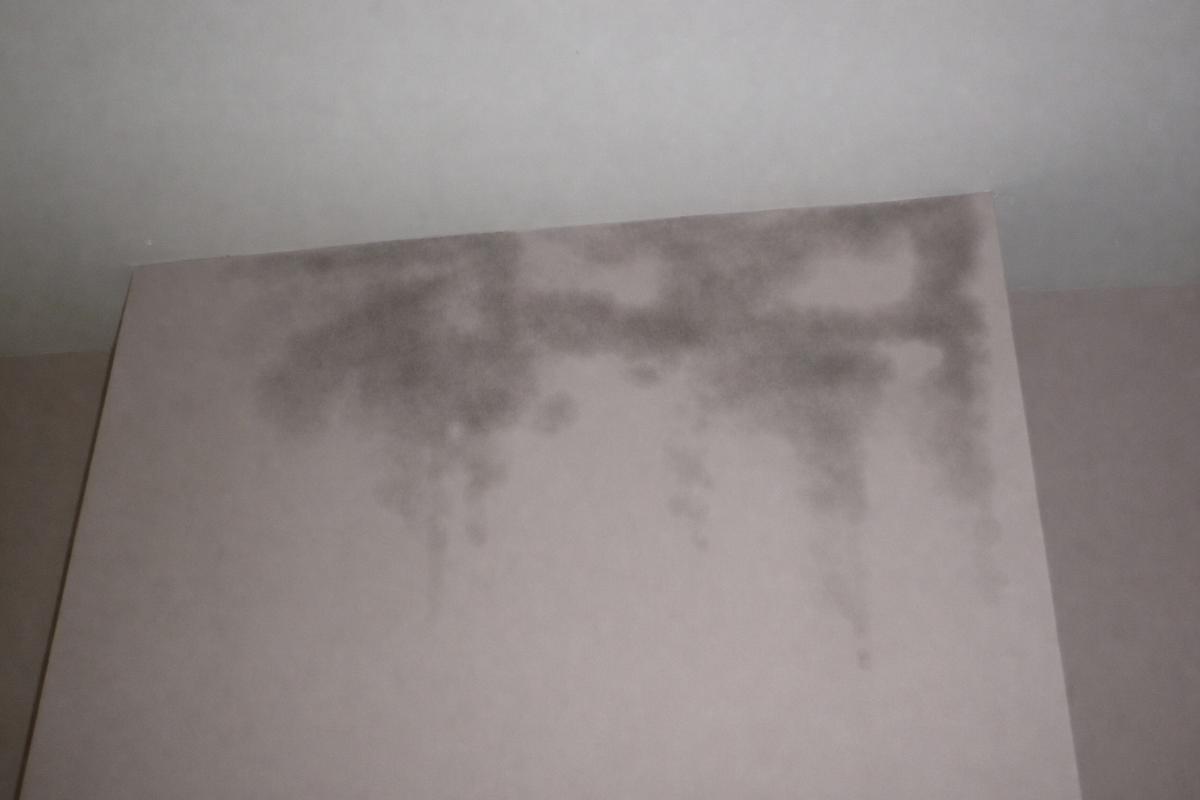
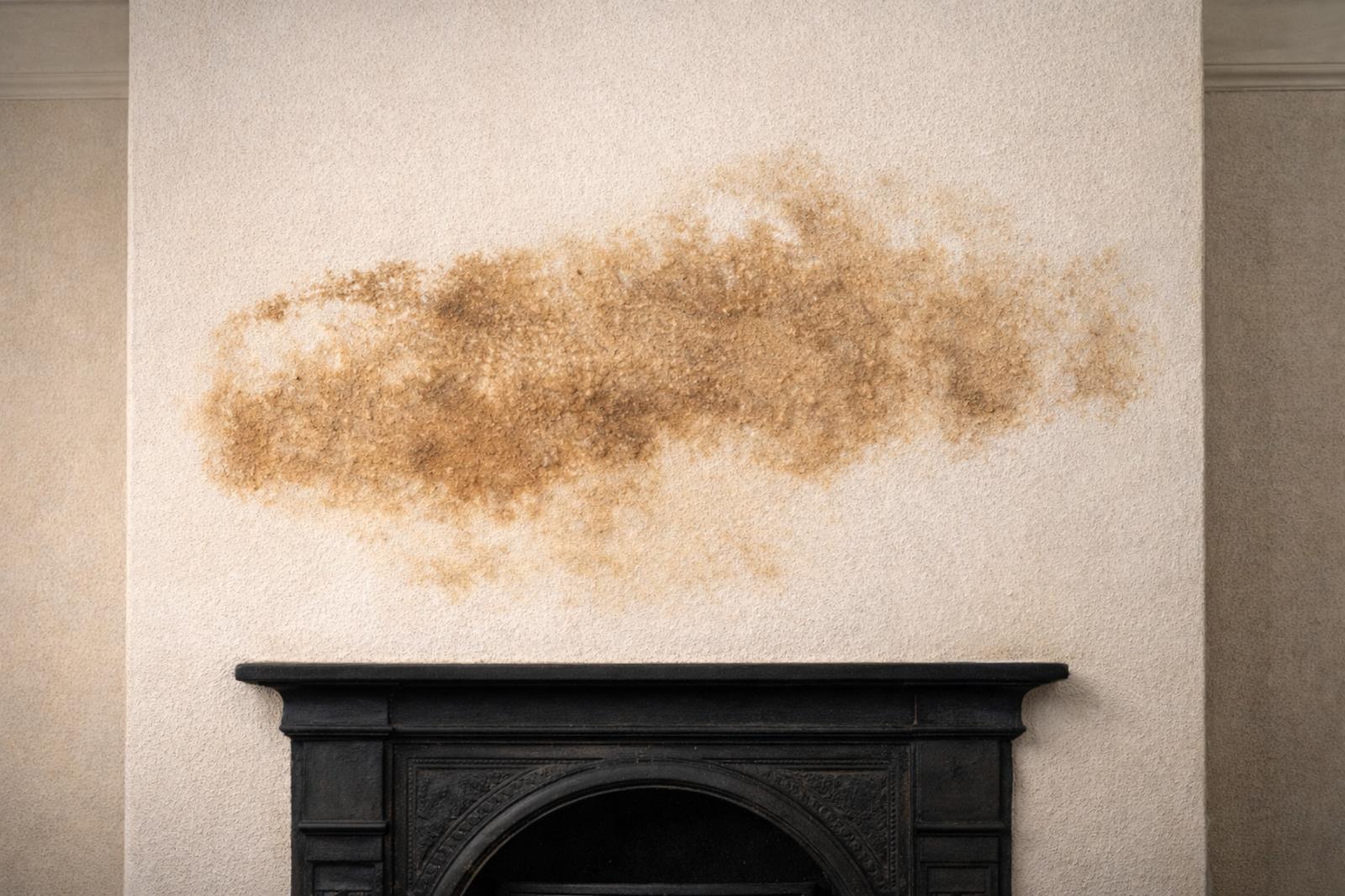
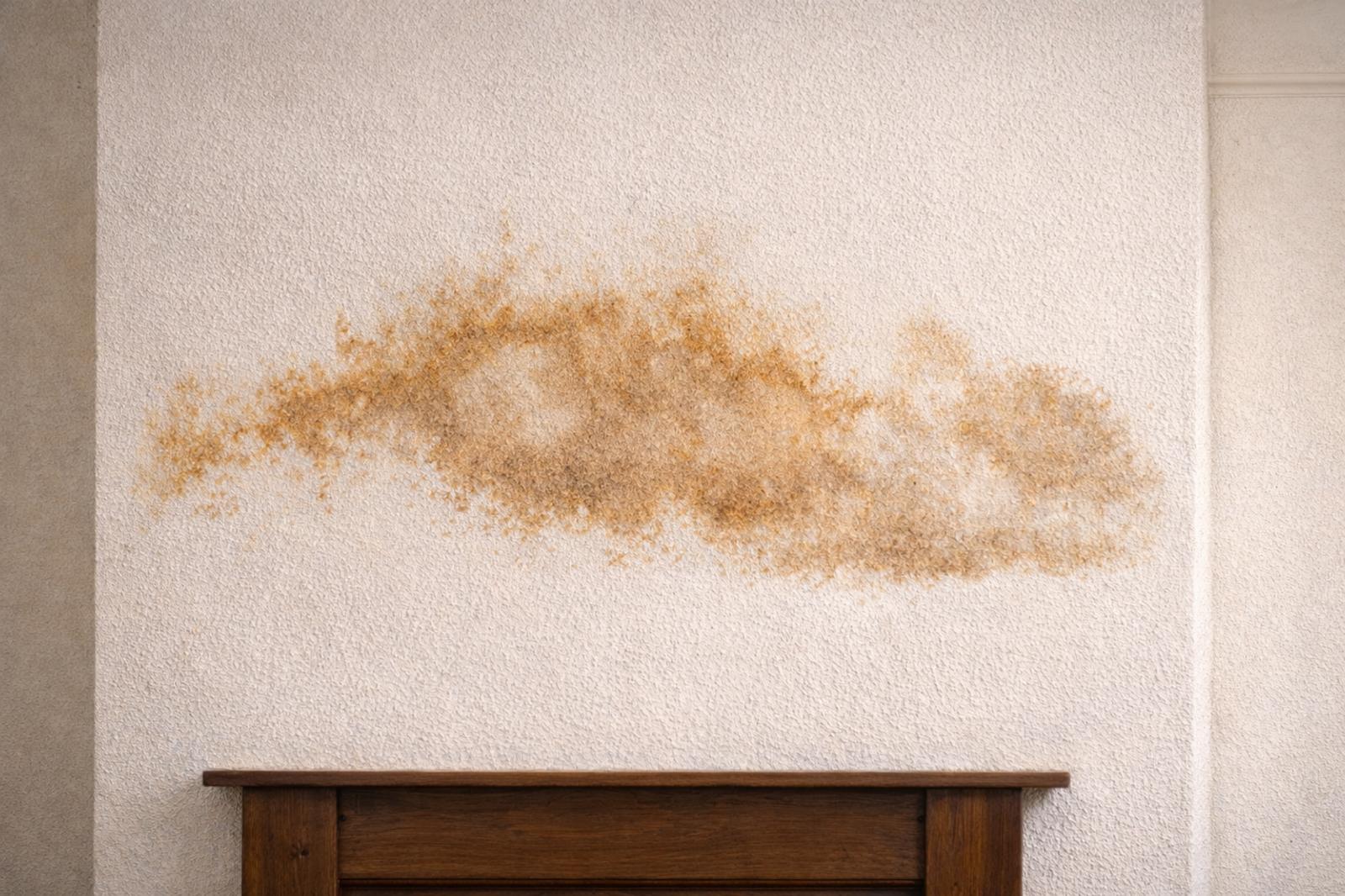
Dampness typically presents as a single, well-defined, localised damp patch on the face of a chimney breast or adjacent flue wall serving an open fire. The affected area is commonly located on the upper portion of the chimney breast but may also occur at intermediate levels depending on flue configuration.
Discolouration, brown or yellow staining, and irregular tide marks are frequently observed. The damp patch often persists regardless of recent rainfall and may become more pronounced during periods of high internal humidity, cold weather, or prolonged lack of flue ventilation. Decorative finishes may blister, flake, or fail prematurely, and repeated redecoration often provides only temporary improvement.
Dampness affecting chimney breasts is rarely attributable to a single factor and often requires experienced professional judgement to interpret correctly. Apparent symptoms can be misleading, particularly in traditionally constructed buildings where moisture behaviour differs significantly from modern construction.
Our assessment considers the characteristics of the dampness in the context of the building as a whole, including its age, construction type, historic use, and internal environment. Particular attention is given to whether the observed moisture patterns are consistent with known mechanisms affecting chimney breasts in older properties.
By applying building pathology expertise and an understanding of traditional materials and construction techniques, we are able to identify the most likely cause of dampness and distinguish between defects that appear similar but require very different remedial approaches. Misdiagnosis is common, as dampness affecting chimney breasts frequently presents in ways that mimic other moisture-related defects while arising from entirely different mechanisms.
This allows us to provide clear, proportionate advice that avoids unnecessary or ineffective works and is appropriate to the character and construction of the property.
Two principal mechanisms are commonly responsible for dampness affecting chimney breasts serving open fires.
In some instances, moisture ingress may be attributable to defective or deteriorated flashings, failed chimney trays, porous masonry, or the absence of effective damp-proof detailing within the chimney stack. Rainwater entering the chimney structure may migrate laterally through the masonry, manifesting as internal dampness.
More commonly, however, the defect results from hygroscopic salts deposited within the flue lining and surrounding masonry as a consequence of historic coal or solid fuel combustion. These salts readily absorb moisture from humid air within the flue, dissolving and migrating through the masonry and plaster. Once present at the internal surface, the salts continue to attract moisture from the room air, resulting in a persistent damp patch that is largely independent of external weather conditions.
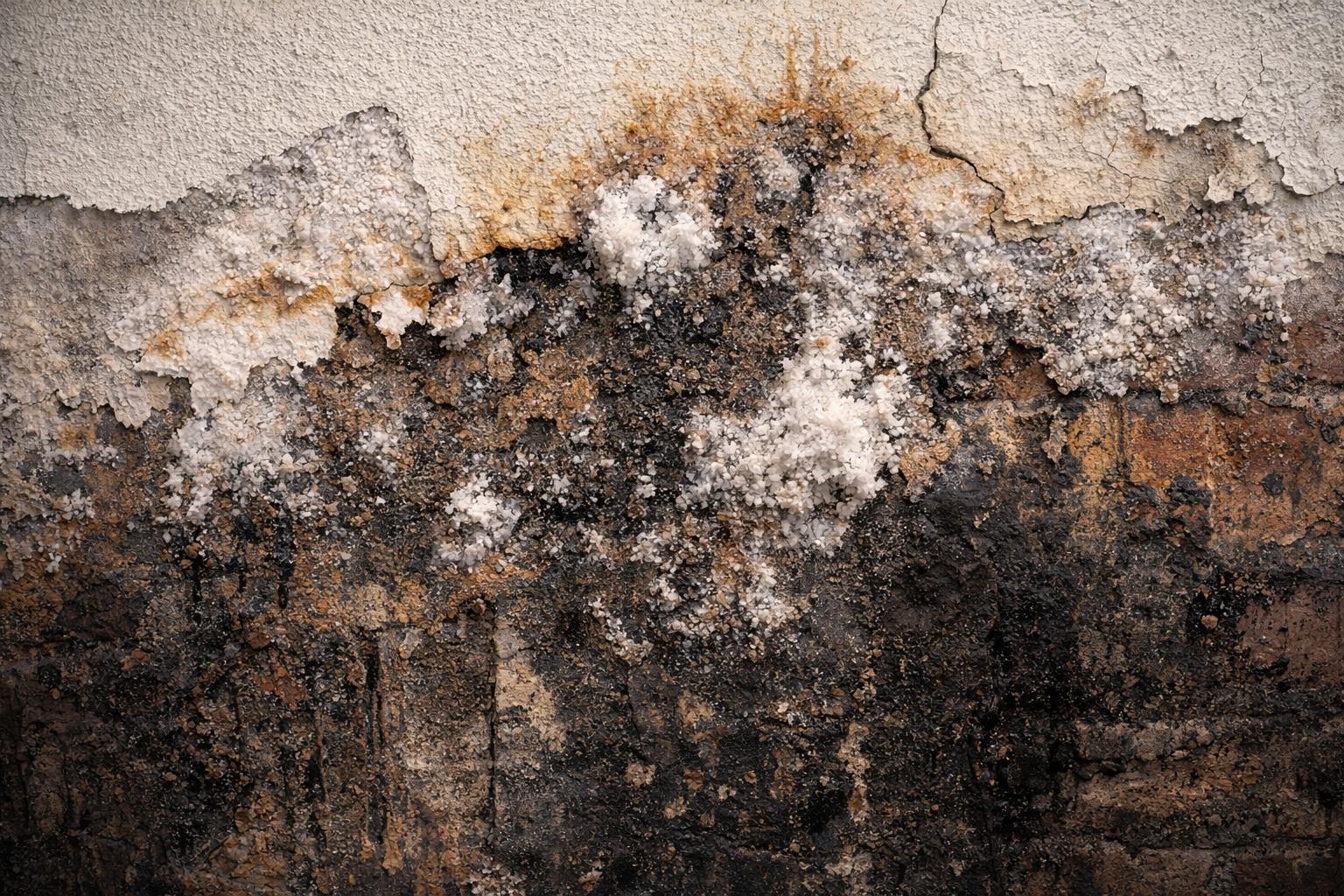
Dampness affecting chimney breasts is rarely structurally significant in isolation; however, it can result in ongoing deterioration of internal finishes and repeated failure of decorative treatments. Persistent moisture may lead to plaster breakdown, staining, and localised surface mould growth, particularly in poorly ventilated spaces.
In heritage and traditionally constructed buildings, inappropriate remedial interventions may cause unintended harm to original fabric or mask the underlying mechanism of failure. This can lead to unnecessary expenditure, loss of historic materials, and continued recurrence of the defect.
Remedial measures must be informed by accurate diagnosis.
Where rain penetration is confirmed, repairs should be undertaken to defective flashings, chimney trays, pointing, or damp-proof detailing. In some cases, this may necessitate partial dismantling of the chimney stack to allow appropriate detailing to be installed or reinstated.
Where hygroscopic salts are identified as the primary cause, chemical damp-proof treatments are generally ineffective. Remedial options may include isolating the contaminated surface using appropriate linings, specialist salt-resistant replastering systems, or breathable finishes. In more severe cases, complete removal of salt-contaminated plaster may be required.
Improving flue ventilation, particularly where open fires are no longer in regular use, is often a critical component of successful long-term remediation.
Modern construction practice typically incorporates chimney trays, damp-proof courses, and flue liners to limit moisture transfer from flues into surrounding masonry. Where correctly installed and maintained, these measures significantly reduce the risk of salt migration into internal finishes.
Nevertheless, careful detailing at roof junctions, flashings, and chimney penetrations remains essential, as even minor defects may allow moisture ingress over time.
In traditionally constructed and listed buildings, chimney breasts frequently form an integral part of the original architectural fabric and internal layout. Remedial works should therefore seek to retain historic materials wherever possible and avoid inappropriate chemical damp-proofing systems.
Preferred approaches typically focus on improved ventilation, isolation of contaminated finishes, and the use of compatible, breathable materials, rather than intrusive replacement or modern impervious treatments.
BRE Digest 77 – Damp-proof courses
Provides technical guidance on the purpose, materials and correct detailing of damp-proof courses in masonry construction, including their role in preventing moisture transfer through walls and associated building elements.
Link: https://www.thenbs.com/PublicationIndex/documents/details?DocId=259193&Pub=BRE
BRE Digest 245 – Chimneys and flues
Explains traditional and modern chimney construction, flue behaviour, moisture movement and common defects affecting chimneys, including issues that may lead to dampness within chimney breasts.
Link: https://www.thenbs.com/PublicationIndex/documents/details?DocId=252328&Pub=BRE
BRE Digest 110 – Condensation
Sets out the mechanisms of surface and interstitial condensation in buildings, including the behaviour of hygroscopic salts and their role in attracting moisture within masonry and plasterwork.
Link: https://www.thenbs.com/PublicationIndex/documents/details?DocId=274030&Pub=BRE
Approved Document C – Site Preparation and Resistance to Contaminants and Moisture
Statutory guidance under the Building Regulations covering resistance to moisture from the ground, precipitation, condensation and contaminants in walls, floors and roofs.
Link: https://www.gov.uk/government/publications/site-preparation-and-resistance-to-contaminates-and-moisture-approved-document-c