We provide fully independent advice and do not pay or receive referral fees from agents or third parties.

Get Your Survey Quote
Call us today to book a survey 01691 898560

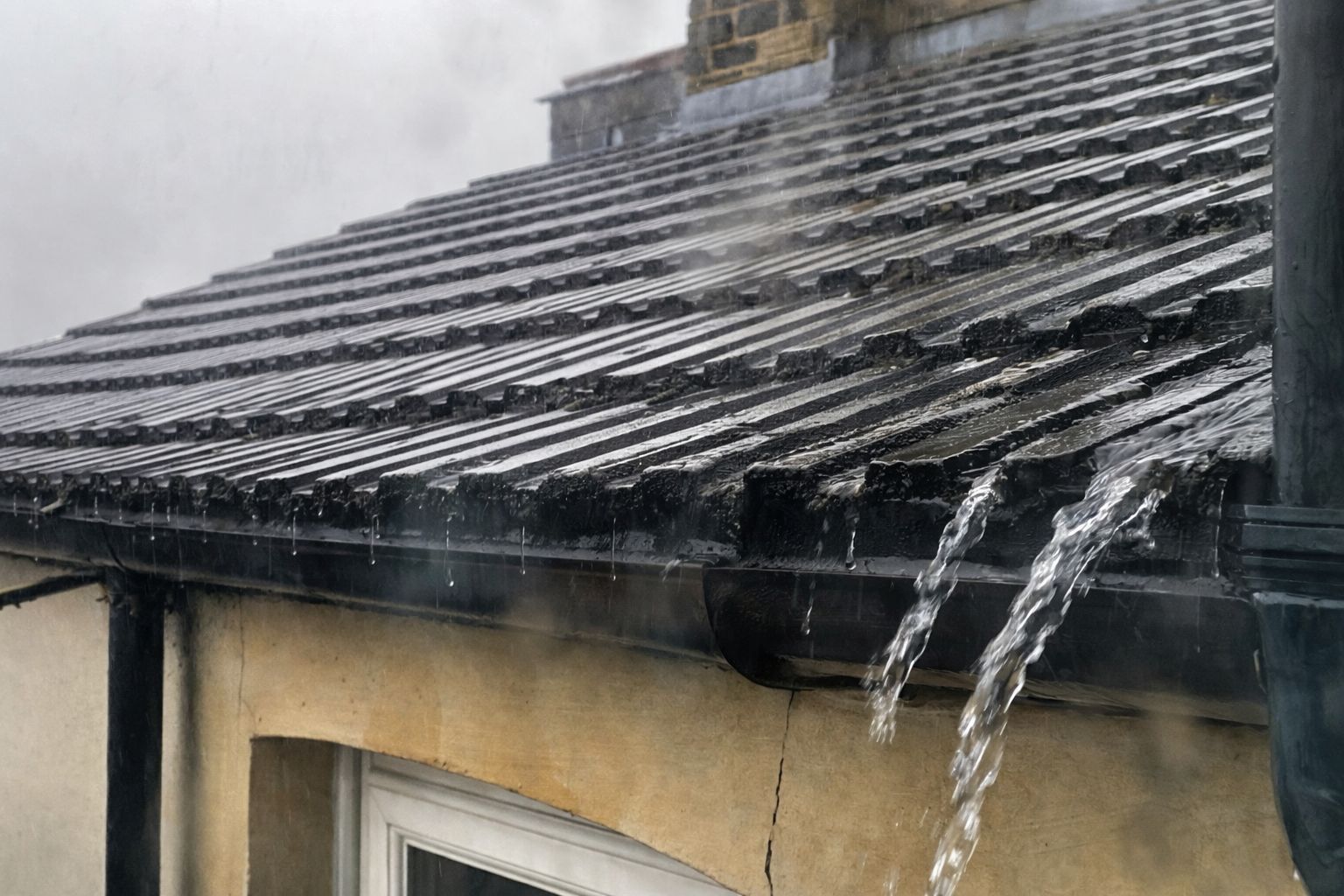
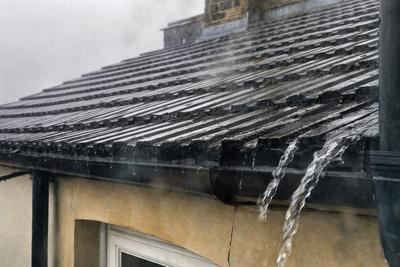
Defective rainwater goods are a common defect affecting residential houses of all ages and construction types. The issue is particularly prevalent in older and traditionally constructed properties where original cast iron gutters and downpipes remain in service, often beyond their original design life. While cast iron systems are inherently durable and repairable, they are susceptible to corrosion where protective coatings fail or maintenance is neglected. Modern properties may also be affected by joint failure, inadequate capacity, or poor installation, but the consequences are often more pronounced in traditional buildings where prolonged wetting of solid masonry can lead to secondary fabric deterioration.
Rainwater goods are a critical component of the building envelope, designed to collect and discharge rainwater safely away from walls, openings, and foundations. In residential houses, these systems commonly comprise gutters, downpipes, hopper heads, brackets, joints, and associated drainage connections.
Traditional buildings frequently retain original cast iron rainwater goods, which, when properly maintained, can provide long service lives. However, defects such as corrosion, failed joints, inadequate falls, or blockages can result in uncontrolled discharge of rainwater onto the building fabric, leading to a range of moisture-related defects.
Defective rainwater goods often result in visible staining or streaking to external wall surfaces beneath gutters, joints, or hopper heads. In cast iron systems, corrosion may be evident at joints, fixings, or low points where standing water is present.
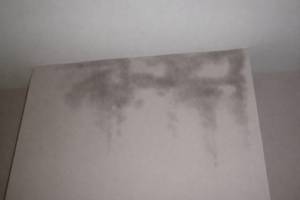
Persistent dampness may lead to moss or algae growth on wall surfaces, particularly on shaded elevations. Internally, damp patches may develop on walls or ceilings adjacent to defective gutters or downpipes, frequently becoming more apparent during or after periods of rainfall.
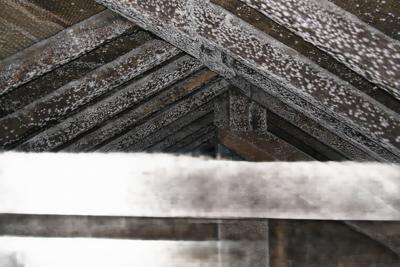
In some cases, damage may be concealed within wall cavities or roof spaces, delaying detection until secondary defects such as plaster deterioration or timber decay become evident.
Inspection should include a detailed visual assessment of all components of the rainwater system, with particular attention given to original cast iron gutters and downpipes. Common defects include failed joints, corrosion at bracket fixings, cracked sections, and inadequate falls resulting in standing water.
Hopper heads, offsets, and connections to gullies or drainage systems should be carefully examined, as these are frequent points of failure. Evidence of historic overflow, including washed areas or concentrated staining, should be noted.
Where safe access permits, gutters should be checked for blockages caused by debris, leaf build-up, or silt. Internally, adjacent roof timbers, wall surfaces, and ceilings should be inspected for signs of moisture ingress or decay attributable to defective rainwater goods.
Defective rainwater goods typically arise from one or more of the following mechanisms:
In cast iron systems, corrosion often begins at joints or low points where water collects, gradually leading to leakage or failure. Once rainwater is discharged directly onto walls, moisture may penetrate masonry joints, saturate solid walls, or enter cavities.
If defects are not addressed, prolonged wetting of external walls may result in deterioration of pointing, render, or masonry units. In solid-walled buildings, repeated saturation can lead to increased moisture levels internally, contributing to dampness at or near ground level.
Internally, secondary effects may include plaster damage, mould growth, corrosion of metal fixings, and decay of embedded timber elements. In heritage buildings, continued moisture exposure can accelerate decay of traditional materials and increase the extent and cost of future repairs.
Remedial works should prioritise repair rather than replacement of original cast iron rainwater goods wherever practicable. Cast iron systems are generally robust and can often be refurbished through careful cleaning, removal of corrosion, localised repairs, and redecoration using appropriate protective coatings.
Where sections are beyond repair, like-for-like replacement using cast iron components of matching profile and dimensions is usually preferable, particularly in listed buildings or conservation areas.
Blockages should be cleared, gutters realigned to achieve adequate falls, and joints properly sealed. Downpipes should discharge into correctly formed gullies or drainage connections, and arrangements that allow water to discharge directly onto the ground adjacent to walls should be avoided.
Rainwater goods should be adequately sized to accommodate roof catchment areas and anticipated rainfall intensity. Fixings should allow for thermal movement, and joints should be detailed to minimise leakage risk.
In traditional buildings, compatibility of materials is important. Cast iron systems are often better suited to historic masonry than modern plastic alternatives, both in terms of durability and visual appearance.
Original cast iron rainwater goods frequently form an integral part of the architectural character of traditional and listed buildings. Their retention and repair is generally encouraged by conservation bodies and local planning authorities.
Replacement with modern plastic systems may adversely affect appearance and can introduce durability issues. Any proposed alterations should be carefully considered, and where listed building consent is required, like-for-like repair or replacement is typically the preferred approach.
1. BRE Digest 369 – Rain Penetration of Masonry Walls
Guidance on rainwater ingress mechanisms, wall detailing and moisture paths in masonry construction.
https://www.thenbs.com/PublicationIndex/documents/details?DocId=269184&Pub=BRE
2. BRE Good Repair Guide 7 – Repair of Rainwater Goods
Practical advice on inspection and repair of gutters, downpipes and rainwater systems to prevent moisture damage.
https://bregroup.com/store/bookshop/repair-of-rainwater-goods
3. BRE Digest 381 – External Render and Moisture Resistance
Technical discussion on how external renders resist moisture and common causes of failure. https://www.thenbs.com/PublicationIndex/documents/details?DocId=273719&Pub=BRE
4. Approved Document C – Site Preparation and Resistance to Contaminants and Moisture
Statutory guidance on moisture resistance in walls, roofs and floors under UK Building Regulations.
https://www.gov.uk/government/publications/site-preparation-and-resistance-to-contaminates-and-moisture-approved-document-c