We provide fully independent advice and do not pay or receive referral fees from agents or third parties.

Get Your Survey Quote
Call us today to book a survey 01691 898560

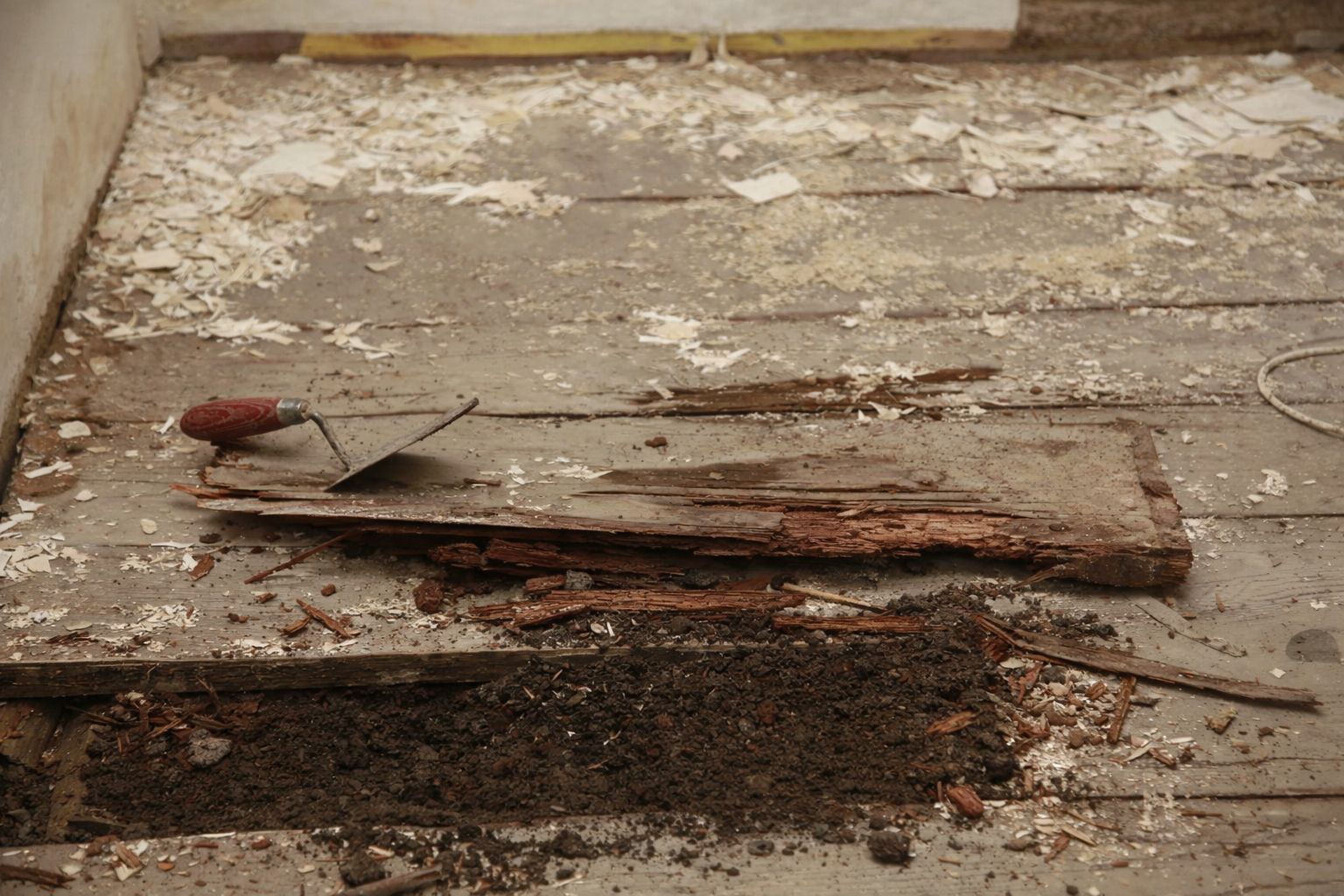
Wet rot is a form of timber decay that occurs where timber is persistently exposed to elevated moisture levels. It can affect a wide range of building types, including traditional masonry buildings with embedded timber elements and modern construction incorporating timber floors, roofs, and joinery. The defect is commonly associated with poor ventilation, plumbing leaks, defective rainwater goods, or damp masonry in contact with timber. Wet rot is not confined to older buildings and may occur wherever timber moisture content remains sufficiently high to support fungal growth.
Wet rot is a common form of fungal decay affecting timber within buildings. It develops when timber is exposed to sustained moisture, typically above 20–25%, and results in a progressive loss of strength and structural integrity. Unlike dry rot, wet rot fungi do not readily spread through masonry, but they can cause significant localised damage where moisture conditions remain favourable.
Correct identification of wet rot and its underlying moisture source is essential, as remedial measures must address both the affected timber and the cause of dampness to prevent recurrence.
Timber affected by wet rot may appear darkened, softened, or cracked, often with a fibrous or cuboidal fracture pattern depending on the fungal species involved. In advanced cases, the timber may be easily penetrated with a screwdriver or crumble when handled.
A musty odour may be present, and fungal growth may be visible on the timber surface. Adjacent finishes may show staining associated with moisture ingress, although visible surface mould is not always present.
Inspection should focus on identifying timber elements that are exposed to moisture, including joist ends built into damp masonry, roof timbers beneath defective coverings, and timber floors above poorly ventilated voids.
The moisture content of affected and adjacent timber should be measured where practicable, and the extent of decay assessed by probing. It is essential to trace and identify the source of moisture, which may include leaks, condensation, rising damp, or rain penetration.
Where structural timbers are affected, the extent of decay may not be fully apparent without opening up concealed areas.
Wet rot develops when timber remains persistently damp, allowing fungal spores naturally present in the environment to colonise the wood. Common contributory factors include:
Unlike dry rot, wet rot fungi generally remain confined to the timber and do not spread extensively through adjacent materials.
If left untreated, wet rot can lead to a significant reduction in the load-bearing capacity of affected timber elements. In floors and roofs, this may result in structural instability, uneven surfaces, or localised collapse.
In addition, persistent moisture conditions may promote secondary defects, including corrosion of metal fixings and decay of adjacent timber components.
Effective remediation requires both removal of decayed timber and elimination of the moisture source.
Decayed timber should be cut out and replaced with suitably treated timber where structural integrity has been compromised. In some cases, localised repairs or reinforcement may be possible, subject to professional assessment.
Moisture sources must be addressed, which may involve repairing rainwater goods, fixing leaks, improving ventilation, or isolating timber from damp masonry. Preservative treatments may be applied to adjacent sound timber where appropriate, but should not be relied upon as a substitute for moisture control.
Timber should be detailed and installed to minimise exposure to moisture, with adequate ventilation provided to voids and roof spaces. Where timber is embedded in masonry, appropriate damp-proof detailing should be incorporated to prevent moisture transfer.
In refurbishment works, care should be taken to ensure that alterations do not inadvertently reduce ventilation or introduce new moisture pathways.
In historic and traditionally constructed buildings, original timber elements may have significant heritage value. Repair strategies should prioritise retention of sound timber and minimal intervention, with replacement limited to areas where decay has compromised structural performance.
Traditional repair techniques and compatible materials should be used wherever practicable, and unnecessary chemical treatments avoided.
This article forms part of the SJM Surveyors Knowledge Base and provides general technical guidance on wet rot affecting timber in buildings. It does not replace a site-specific inspection or professional advice.
1. BRE Digest 429 – Timbers: their natural durability and resistance to preservative treatment
Provides classification of timber durability and guidance on timber species treatability — useful background for understanding timber resistance to rot.
🔗 https://www.thenbs.com/PublicationIndex/documents/details?DocId=200894&Pub=BRE
2. BRE Digest 299 – Dry Rot: its recognition and control
Explains how to recognise and eradicate timber decay caused by dry rot fungi; principles that inform timber decay diagnosis.
🔗 https://www.thenbs.com/PublicationIndex/documents/details?DocId=248719&Pub=BRE
3. BRE Good Repair Guide 12 – Wood rot: assessing and treating decay
Covers identification and treatment of wood rot (including wet rot), ideal for surveyors assessing decay severity.
🔗 https://bregroup.com/store/bookshop/wood-rot-assessing-and-treating-decay
4. BRE Digest 503 – External timber structures: preservative treatment and durability
Guidance on timber preservation and durability, useful where decay risk is influenced by exposures such as external walls or structural timbers.
🔗 https://bregroup.com/store/bookshop/external-timber-structures-preservative-treatment-and-durability.-downloadable-version-