We provide fully independent advice and do not pay or receive referral fees from agents or third parties.

Get Your Survey Quote
Call us today to book a survey 01691 898560

Solid masonry walls; traditional brick and stone construction; properties without an effective damp-proof course or where the damp-proof course has failed or been bridged.
Dampness occurring at or near ground level is a commonly reported defect in older buildings and is often attributed to so-called “rising damp”. While genuine rising damp can occur, it is frequently misdiagnosed. Accurate identification requires careful inspection of the construction, the presence and condition of any damp-proof course (DPC), and consideration of alternative moisture sources such as bridging, ground levels, or internal condensation.
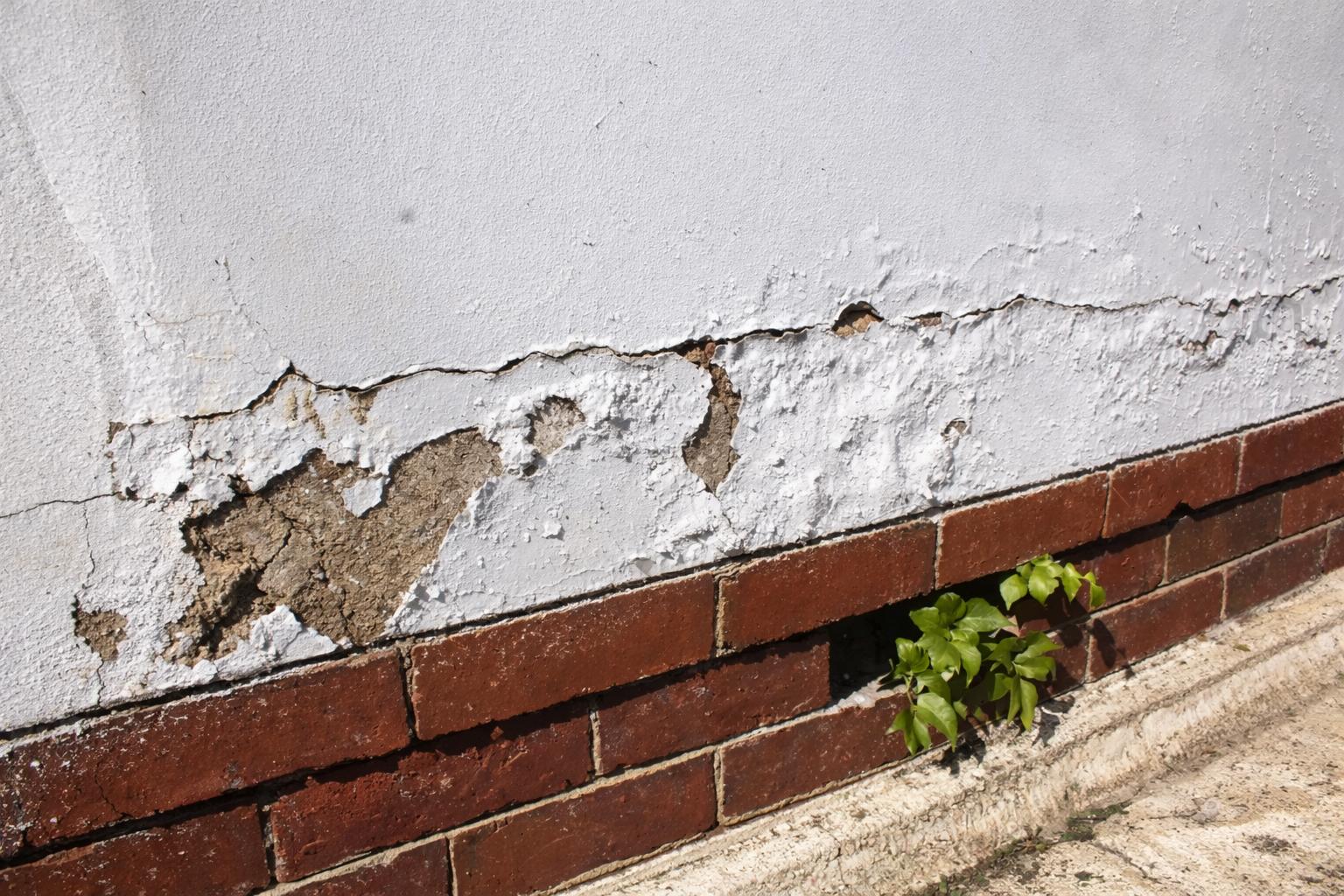
Dampness is typically evident on internal wall surfaces close to ground level and may extend up to approximately 750 mm above floor level, though greater heights can occur in severe cases or where evaporation is restricted.
Decorations may appear blistered, discoloured, or detached. Where surfaces are dry, a film of salts may be present, often appearing as a white or fluffy crystalline deposit. Skirting boards may show signs of decay, and where floors are of suspended timber construction, joist ends and adjacent floorboards may be weakened.
The inspection should first establish whether a damp-proof course is present. Where identified, its continuity and position should be checked internally, externally, and within the cavity where applicable.
Particular attention should be paid to materials that may bridge the DPC, including external ground levels, render, paving, internal floor screeds, or debris within the cavity. The condition of vertical joints in blue brick DPCs should be examined, as moisture may travel upwards through mortar-filled joints.
Where necessary, limited opening-up may be required to confirm the material forming the DPC and to assess whether it remains intact and effective. Timber elements adjacent to damp walls, including skirting boards and suspended floor joists, should also be inspected for signs of fungal decay.
Dampness at ground level may arise from one or more of the following mechanisms:
The results of the investigation should make it possible to identify which of these mechanisms is responsible.
If left unresolved, persistent dampness can result in decay of embedded timbers, deterioration of plaster finishes, and ongoing damage to internal decorations. Salt contamination within plaster may continue to attract moisture even after the original source has been addressed, leading to prolonged drying times and recurring cosmetic defects.
In heritage buildings, inappropriate remedial measures may exacerbate the problem by restricting evaporation or introducing incompatible materials.
Where no damp-proof course exists, one may be introduced using an appropriate method suited to the form of construction. Options include physical insertion of a DPC or chemical injection systems, though the suitability of these methods must be carefully assessed on a case-by-case basis.
Where the DPC has been bridged, the bridging material should be removed wherever practicable. In cases where bridging is integral to the structure, it may be necessary to introduce a vertical damp-proof barrier to isolate the damp zone.
If the original DPC is defective, it may require replacement or the installation of a new DPC at a suitable level. Blue brick DPCs should be checked for moisture transfer through vertical joints, which may require cleaning out and repointing with an appropriate mortar.
Salt-contaminated plaster should be removed to a sufficient height and replaced with a suitable specification once the wall has had adequate time to dry.
Current Building Regulations require the provision of an effective damp-proof course, formed of materials compliant with relevant British Standards or holding appropriate certification.
Careful detailing is required where damp-proof courses and damp-proof membranes intersect, particularly at floor and wall junctions, to prevent moisture bypass. The design should ensure continuity of protection and avoid reliance on sealants as a primary moisture barrier.
In solid-walled heritage buildings, moisture movement is often managed through evaporation rather than exclusion. Introducing impermeable materials, such as cement-based renders or dense plasters, may worsen damp conditions by trapping moisture within the wall.
Remedial strategies should therefore prioritise breathability, minimal intervention, and retention of original fabric wherever possible. Decisions should be informed by an understanding of traditional construction methods and moisture behaviour.
This article forms part of the SJM Surveyors Knowledge Base and provides general technical guidance on dampness affecting walls. It does not replace a site-specific inspection or professional advice.