We provide fully independent advice and do not pay or receive referral fees from agents or third parties.

Get Your Survey Quote
Call us today to book a survey 01691 898560

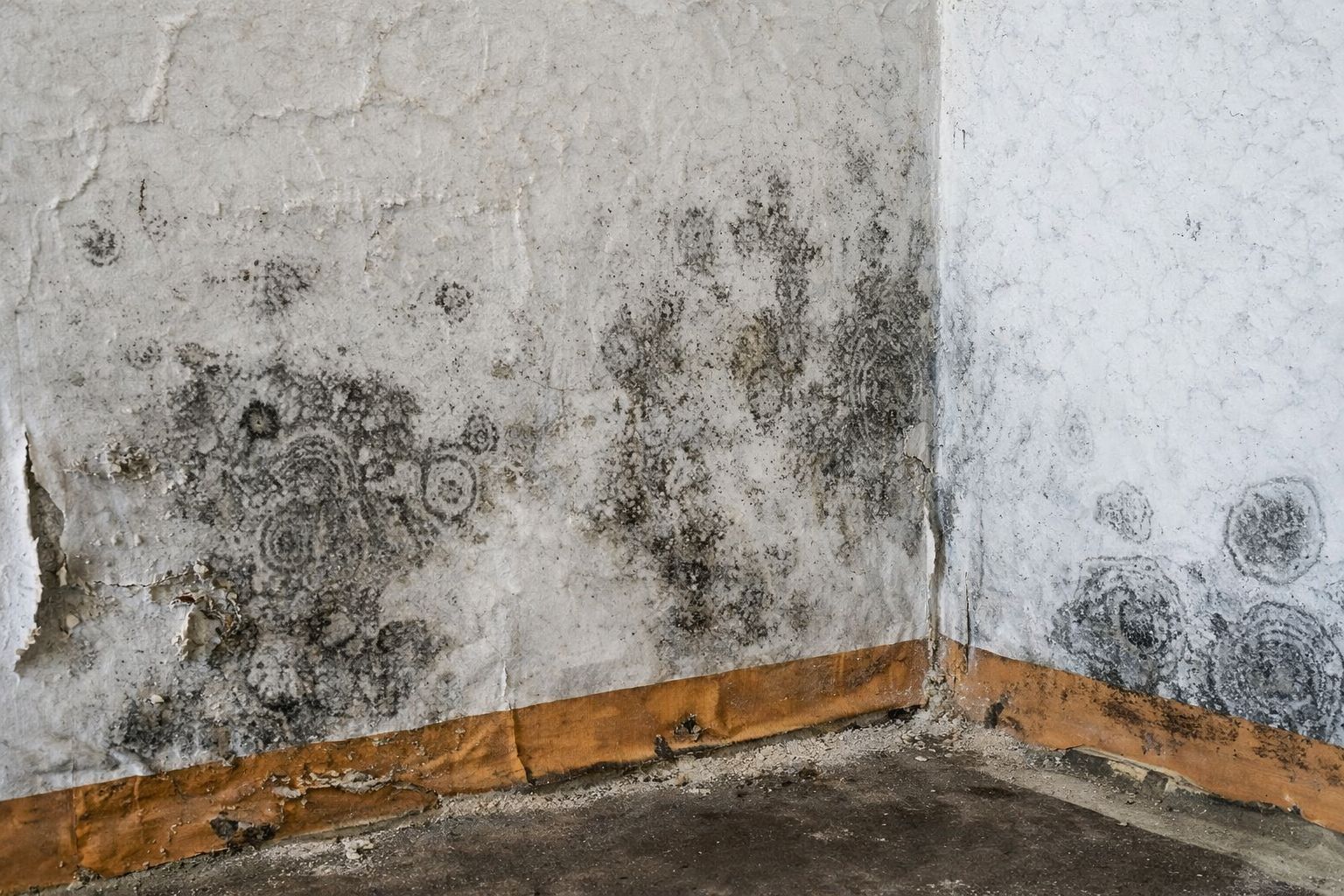
This form of dampness is most commonly encountered in residential buildings where internal humidity levels are elevated in relation to surface temperatures. It can affect both traditional and modern construction, including solid-walled and cavity-walled buildings, and is frequently associated with properties that are intermittently heated, inadequately ventilated, or subject to high moisture-producing activities. The defect is not directly related to external rainfall and may occur irrespective of weather conditions. In older and traditionally constructed buildings, the risk may be increased where impermeable finishes or modern alterations have restricted natural moisture evaporation.
Dampness on walls that is not associated with rainfall is most commonly related to condensation, interstitial moisture movement, or residual moisture within the building fabric. Unlike rain penetration, this form of dampness is typically influenced by internal environmental conditions, patterns of occupancy, heating regimes, and ventilation provision.
Correct diagnosis is essential, as the visual symptoms may resemble other forms of dampness, and inappropriate remedial measures may exacerbate the problem, particularly in traditionally constructed buildings.
Dampness may present as generalised surface wetting or as localised patches, often occurring on colder parts of walls such as corners, areas behind furniture, around window reveals, and at lintels. Beads of moisture may be visible on wall surfaces, window frames, or metal fixings.
Mould growth is frequently present, particularly black spot mould, and is often accompanied by musty odours. Internal decorations may blister or peel, and metal components may exhibit corrosion.
The dampness is typically independent of rainfall and is often more pronounced during colder or more humid periods. It may initially be intermittent but can become persistent where environmental conditions remain unfavourable.
The investigation should begin with a review of the building’s occupancy patterns, heating arrangements, and ventilation provision. Particular attention should be paid to activities that generate moisture, such as cooking, bathing, drying clothes internally, and the use of flueless heaters.
Environmental conditions should be assessed where practicable, including internal temperature and relative humidity. This may be undertaken using spot measurements or, preferably, by installing recording equipment to monitor conditions over a representative period.
Surface temperatures of walls should be measured to identify cold bridges, particularly at corners, junctions, lintels, and areas of reduced insulation. The construction of the wall should be established, including the presence of insulation, vapour barriers, or impermeable finishes that may restrict moisture movement.
Dampness not associated with rainfall generally arises from one or more of the following mechanisms:
Warm, moisture-laden air condenses on cold internal surfaces when the surface temperature falls below the dew point. This is the most common cause and is strongly influenced by inadequate ventilation, insufficient heating, and cold bridging.
Moisture may condense within the wall structure itself rather than on the internal surface. This is more likely where impermeable external finishes or internal linings restrict vapour movement, allowing moisture to accumulate within the wall.
In newer buildings or recently altered properties, dampness may arise from moisture retained within the fabric following construction. This moisture can increase heat loss and lower surface temperatures, thereby promoting condensation.
Persistent condensation-related dampness may lead to mould growth, deterioration of internal finishes, corrosion of metal components, and a reduction in indoor air quality. Prolonged exposure to elevated moisture levels may also contribute to timber decay and reduced thermal performance.
In heritage and traditionally constructed buildings, inappropriate attempts to seal internal surfaces may increase moisture retention and lead to concealed fabric deterioration.
Remedial measures should be proportionate and tailored to the specific causes identified.
This may include the provision or upgrading of extract ventilation to kitchens and bathrooms, the introduction of background ventilation, and ensuring existing vents are unobstructed.
Consistent background heating can reduce surface cooling and condensation risk, particularly in bedrooms and intermittently heated rooms.
Internal or external wall insulation may be appropriate where surface temperatures are consistently low, subject to careful detailing to avoid interstitial condensation. Cavity insulation should be considered cautiously in exposed locations.
Occupant behaviour should be reviewed, including moisture-generating activities and ventilation practices. Where residual construction moisture is present, provision should be made for adequate drying through ventilation.
Buildings should be designed to balance insulation, ventilation, and heating to control internal humidity levels. Cold bridges should be minimised through careful detailing, and vapour control layers should be incorporated where appropriate.
Mechanical extraction at source is particularly effective in reducing moisture loads. Any measures introduced should be assessed to ensure they do not increase the risk of interstitial condensation.
In solid-walled and heritage buildings, moisture movement is often controlled through evaporation rather than exclusion. The introduction of impermeable linings, dense plasters, or surface sealants may trap moisture within the wall, increasing the risk of interstitial condensation and fabric decay.
Remedial strategies should prioritise breathability, minimal intervention, and compatibility with traditional materials and construction methods.